Engine interchange is a polarizing topic in the Toyota 4Runner community. Some people argue that the power and performance upgrade is not worth the risks and resources involved, while others believe that it's worthwhile.
Our Toyota 4Runner engine interchange chart will provide you with a comprehensive engine information. By searching through this chart, you can not only find out what engine you have in your vehicle but also discover other available options. They include engines used in this very model across the trims and years or even engines from similar models and makes.
Being a true classic masterpieces, project cars often involve some major power upgrades. And even unlucky 4Runner owners with dead motors can actually subvert this situation to their own benefit and swap the original engine with another compatible option, simultaneously upgrading the overall performance.
Regardless of the reason why you would want to swap your old engine for a different one, this feat can be both risky and exhausting without understanding these engine interchange guidelines.
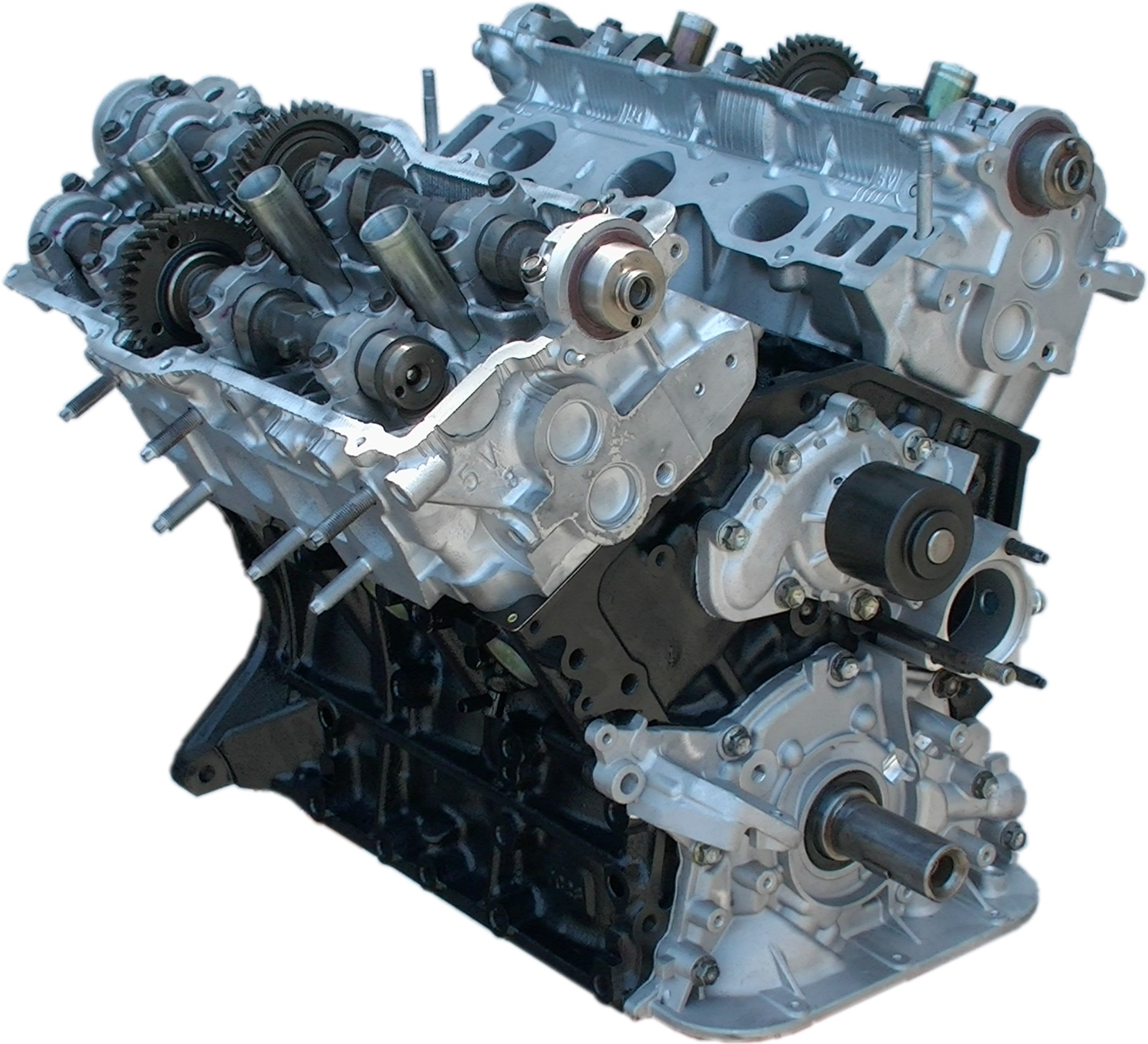
What Engines Can You Put in your Toyota 4Runner?
The engine you can put in your Toyota 4Runner depends on several factors, including the year of your vehicle, the engine size and configuration, and local emissions regulations. However, the most important thing to consider before interchanging engines is their compatibility with other systems inside your vehicle.
This process involves so much more work than just taking one engine and replacing it with another of the same size. The new engine must fit perfectly with an electrical system, fuel lines, cooling, intake and exhaust, drivetrain, and so many more.
Because of these factors, the engines can be roughly divided into two major categories. First, engines that are relatively easy to swap. They are like a plug&play option that can be found in an engine swap compatibility chart. And second, engines that can be integrated into the existing systems with some extra effort and modifications.
Luckily, there is a useful and informative tool that can help you find out what engines you can put in your Toyota 4Runner without too much work. This “tool” is an engine swap compatibility chart you can find below.
Hopefully, this will make your research easier and more efficient. Within a few minutes, you can discover which vehicle is using the same engine as yours and make informed decisions about maintenance, repairs, upgrades, and more.
Toyota 4Runner Engine Swap Compatibility Chart
| Toyota / V6 / GR - Petrol / 1GR / 1GR-FE | |
|---|---|
| Toyota 4Runner, | 2003, 2004, 2005, 2006, 2007, 2008, 2009, 2010, 2011, 2012, 2013, 2014, 2015, 2016, 2017, 2018, 2019, 2020, 2021, 2022 |
| Toyota Tacoma, | 2005, 2006, 2007, 2008, 2009, 2010, 2011, 2012, 2013, 2014, 2015 |
| Toyota Tundra | 2005, 2006, 2007, 2008, 2009, 2010, 2011, 2012, 2013, 2014 |
| Toyota / Inline-4 / TR - Petrol / 2TR / 2TR-FE | |
|---|---|
| Toyota 4Runner, | 2010 |
| Toyota Tacoma | 2005, 2006, 2007, 2008, 2009, 2010, 2011, 2012, 2013, 2014, 2015, 2016, 2017, 2018, 2019, 2020, 2021, 2022 |
| Toyota / V8 / UZ - Petrol / 2UZ / 2UZ-FE | |
|---|---|
| Lexus LX 470, | 1999, 2000, 2001, 2002, 2003, 2004, 2005, 2006, 2007 |
| Toyota 4Runner, | 2003, 2004, 2005, 2006, 2007, 2008, 2009 |
| Toyota Land Cruiser, | 1999, 2000, 2001, 2002, 2003, 2004, 2005, 2006, 2007 |
| Toyota Sequoia, | 2001, 2002, 2003, 2004, 2005, 2006, 2007, 2008 |
| Toyota Tundra | 2000, 2001, 2002, 2003, 2004, 2005, 2006, 2007, 2008, 2009 |
| Toyota / V6 / VZ - Petrol / 5VZ / 5VZ-FE | |
|---|---|
| Toyota 4Runner, | 1999, 2000, 2001, 2002 |
| Toyota Tacoma, | 1999, 2000, 2001, 2002, 2003, 2004 |
| Toyota Tundra | 2000, 2001, 2002, 2003, 2004 |
| Toyota / Inline-4 / RZ - Petrol / 3RZ / 3RZ-FE | |
|---|---|
| Toyota 4Runner, | 1999, 2000 |
| Toyota Tacoma | 1999, 2000, 2001, 2002, 2003, 2004 |
Learning about your current engine is a good starting point. We have some useful tips for that too. So read on to find out how to know what engine your vehicle has and where to get the name and specifications.
What Kind of Engine Does my 4Runner Have?
It is important to understand what engine your Toyota 4Runner has and what characteristics it has before you can actually look for an interchangeable option. This step is the easiest one, but there are multiple ways for you to find the engine specifications.
To determine the engine name and type under the hood of your vehicle, you can follow these simple steps:
- Locate the engine information placard. This is typically found on the engine itself, the firewall, or the radiator support. It should list the engine name and type, as well as its size and specifications.
- Consult the owner's manual. The owner's manual always includes a few passages about the engine, including its specifications, name and type. Be careful, though, if your car has been in use. The manual may be misleading if the previous owner decided to modify the vehicle.
- Look for the engine code. The engine code is typically a series of letters and numbers stamped on the engine block. You can use this code to look up the engine specifications online or consult a dealership or mechanic.
IMPORTANT NOTE!
Keep in mind that some older vehicles, especially used ones, may have had engine swaps or modifications before you even purchased them. So it's possible that the engine under the hood of your Toyota 4Runner may not match the one listed in the vehicle's manual or information placard. In this case, it may be best to consult a mechanic or specialist.

How do I know if an engine will fit in my Toyota 4Runner?
An engine swap can be a hit or miss, but it definitely shouldn't. To get the best performance with a new engine, you should take your time with deep research.
Of course, consulting a specialist is a must, but before you do that, you should become acquainted with some crucial elements and their influence on your project.
It can be difficult to determine if an engine will fit in your Toyota 4Runner without doing a thorough check of compatibility with the systems tightly linked to the engine. Here is a list of ten things that determine whether the engine fits your vehicle and how it will perform.
Axles and Drivetrain
You can guess why the engine's size and output must match the capacity of the axles and drivetrain since they are basically responsible for converting the engine's rotational power into the linear motion that moves the wheels. If the torque and power are too much for them to bear, these OEM parts must be replaced with aftermarket options to accommodate the Toyota 4Runner engine swap.
To successfully replace your transmission, front-wheel drive swaps necessitate axles that can bridge the gap between the transaxle/intermediate shaft and front wheel hubs.
For rear-wheel drive replacements, however, a custom driveshaft has to be tailored specifically for your Toyota 4Runner with joints compatible on both ends - one end being connected to the new transmission's yoke while the other connects to its existing U-joint of your rear end.
Pedal Assembly
Engine interchange on Toyota 4Runner requires some work on gearboxes and pedals which often involves more than a simple cable swap. Older, cable-driven throttle bodies simply need the appropriate cable. However, electronically controlled versions can be complex, requiring an ECU, pedal assembly and wiring.
Clutch pedals come in two varieties. Cable-operated assemblies may be able to reuse the car's original cable for modern transmissions. To retrofit newer hydraulically controlled transmissions into older chassis, an adapter line to connect the clutch slave cylinder must be made as well as an adapter kit including pedal assembly, master cylinder and reservoir.
Hydraulically operated gearboxes can also be placed into older chassis that feature cable-operated transmissions with similar requirements.
Shifter
An engine swap can be an incredibly rewarding project, but it's important to ensure compatibility between the Toyota 4Runner and the donor vehicle. To guarantee a seamless integration of your engine, it is essential to make sure that the shifter tunnel fits with the new components. If you mix and match parts from different cars, you may run into difficulties later on. To prevent unnecessary snags in this process, be certain to acquire all of your elements from one donor vehicle only.
Fuel System
Fuel system compatibility issues may arise when interchanging engines in a Toyota 4Runner because of differences in the fuel delivery systems and components between the two engines.
Keep in mind that different motors can possibly have different fuel injection systems, pumps, filters, tanks, fuel lines and hoses. These parts can be located in different places, making it harder to fit another engine in the same place. Or they might be unable to keep up with the new engine's appetites. In either case, it is best to consult a specialist who can navigate you through this convoluted system.
Keeping these issues in check is vital. Any leak can potentially lead to engine failure, fire and other dangerous accidents.
Cooling System
The catch with a bigger engine fitment is that it requires more cold air intake but leaves less space to upgrade it. An electric cooling fan can be beneficial for larger engines and those in confined spaces. To ensure the air passes through the radiator, the fan must be reversed in terms of polarity and direction. Additionally, depending on your 4Runner’s engine, custom radiator hoses and heater hoses may be necessary to complete the installation.
A/C and Power Steering
Swapping engines on Toyota 4Runner can sometimes have rather unexpected effects. One of them is a common issue with A/C and power steering compatibility. This can happen after a successful engine interchange with a power upgrade. This is due to the pressure switches for power steering and A/C, which are designed to protect these components from damage when put under strain.
If you don't want either system to cut out on you under a heavy load, check and then double-check their compatibility with each other and the new engine.
Intake and Exhaust
While the Toyota 4Runner engine swap compatibility chart provides enough useful information, it cannot tell you whether a new engine would align properly with the intake and exhaust pipes in your car.
It is possible that two cars with interchangeable engines might have completely different intake piping. If you do not have the patience to do all the necessary welding, cutting and rerouting, then your best option would be to pick a compatible engine from a vehicle with similar piping.
The exhaust system is a bit different, though. Connecting it to the exhaust manifold may require a special adapter pipe either from the aftermarket or a custom-made one.
Electrical
When doing an engine swap on 4Runner, the electrical system is a crucial factor in determining the success of the project. It involves selecting the appropriate Engine Control Unit (ECU) and, in some cases, using a standalone engine management system.
The process requires knowledge of electrical schematics and multiple wiring harnesses and could involve unexpected complexities such as wire splicing and connector swapping. Having shop manuals for both the engine and the car and understanding electrical schematics is important.
Clearance Issues
Clearance issues during an engine swap between different vehicles can arise due to differences in physical dimensions between the motor and the engine’s bay.
This can include issues with the engine being too large to fit in the engine bay, conflicting with other components such as the transmission, suspension, and exhaust systems.
To avoid these issues, it's important to carefully measure and compare the dimensions of the new motor and the 4Runner engine bay before starting the swap.
In some cases, modifications may be necessary to resolve clearance issues, such as repositioning the engine and modifying using custom brackets and mounts.
You may need a taller hood or to trim the under-skeleton of the hood. You may also need to notch cross members and subframes or relocate other components, such as an ABS pump or brake proportioning valve, that may be in the way.
Suspension and Brakes
The original suspension components on your 4Runner ride were built to handle the weight and power of the stock engine. But now that you're swapping in a new engine, those springs, shocks, rotors, calipers, and pads may not be up to the task.
This can lead to a compromised ride and reduced braking power. To fix the suspension issue, you can upgrade to high-performance dampers or a stiffer coilover system.
Improving your brakes can be as simple as swapping out the pads for some that perform better, or in some cases, you may need to upgrade to larger brakes or even go for a rear-disc conversion.
The Benefits of Swapping Engines on 4Runner
Nobody would consider swapping engines if it didn't yield results. The most obvious upgrade is power and torque. If your current engine is underperforming, or if you just want it to have a bit more zip, swapping out your engine can be a great way to rev up the horsepower without making any other major changes.
Whether you’re looking for a little extra oomph on the highway or need some help in drag racing situations, swapping engines can give your Toyota 4Runner the boost you’re after.
When you own a vehicle with a stock engine, it can be hard to find the right aftermarket parts, especially if your car is older. But don't worry! Consider swapping out your engine for one that offers more accessible aftermarket options - this way, you'll save time and money in the long run while also having access to customizing choices.
How Long Does It Take to Swap an Engine on Toyota 4Runner
The length of an engine swap can vary widely, depending on the knowledge and proficiency of the mechanic, as well as the condition and type of vehicle.
As a rule, an uncomplicated engine exchange usually takes anywhere from several hours to one full day.
On the other hand, more intricate swaps or those involving extra repairs or alterations may take days—or even weeks!
How Hard Is It to Swap 4Runner Engine?
Installing a new engine into a Toyota 4Runner can be a complex task. It involves stripping out the existing engine and disconnecting cables and parts before connecting and fitting the new engine.
The process may vary in difficulty. Basic installations may require minimal modifications, while more advanced swaps might need more extensive repairs.
Without proper tools and experience with engines, it is best to seek assistance from professionals who are knowledgeable in this area of work.
How Much Does Toyota 4Runner Engine Swap Cost?
The cost of engine interchange can be quite unpredictable - from a basic short block costing around $500 to an advanced high-performance setup costing up to $9,000. However, don't forget about the costs for parts when planning your Toyota 4Runner project, as they, too, must be taken into account.
FAQs
Will a 22RE engine fit in a 1989 Toyota 4Runner?
Yes, the 22RE will bolt directly into 1989 4Runners that originally had a 22R. Mounts, wiring, and ECU connections are compatible.
Can I swap a 3.4L 5VZ-FE into a 2nd gen 4Runner?
Yes, the 5VZ-FE from a 1996–2004 Tacoma or 4Runner fits well with a swap kit and wiring harness modifications.
Will a 1UZ-FE Lexus V8 fit a 1995 4Runner?
Yes, it fits with custom mounts and wiring work. The 1UZ-FE is a popular swap for power and smoothness.
Can I install a diesel 1KZ-TE engine in a 1994 4Runner?
Yes, it’s a proven upgrade from Hilux Surf models, giving better torque and fuel efficiency for off-road use.
What engines fit in a 1st gen 4Runner (1984–1989)?
The 22R, 22RE, and 3RZ-FE are direct fits. LS and 1UZ swaps require custom fabrication.
Can I put a 3.4L Tacoma engine into a 1999 4Runner?
Yes, both use 5VZ-FE engines. Ensure you use matching ECU and wiring harness.
Will a 2UZ-FE V8 from a Sequoia fit a 3rd gen 4Runner?
Yes, it fits with fabrication and wiring work. The 2UZ provides great torque for 1996–2002 4Runners.
Can I put a newer 4.0L V6 from a 5th gen 4Runner into a 4th gen?
Yes, but wiring and ECU tuning differ. A full harness and ECU swap is recommended.
Will an LS engine fit in a 3rd gen Toyota 4Runner?
Yes, LS swaps are popular with proper kits. Expect wiring and transmission adaptation.
Can you swap a 2.7L 3RZ-FE into a 1990 4Runner?
Yes, it fits with fabrication and new mounts. The 3RZ-FE offers better torque and reliability.
Will a Tacoma 3.5L engine fit a 5th gen 4Runner?
No, the 3.5L 2GR-FKS requires major ECU and transmission modifications.
Can a Lexus GX470 4.7L engine fit in a 2003 4Runner?
Yes, both use 2UZ-FE engines, making the swap straightforward if ECUs match.
Is the 3.0L 3VZ-E interchangeable with the 3.4L 5VZ-FE?
Not directly, but the 5VZ-FE swap is well-documented for 1990–1995 4Runners with proper kits.
Will a Tundra V8 engine fit in a 4th gen 4Runner?
Yes, 2UZ-FE engines are compatible across Tundra and 4Runner platforms of the same era.
Can I put a Supra 2JZ engine into a 3rd gen 4Runner?
Yes, but this swap needs full custom mounts and RWD drivetrain conversion.
Will a Hilux Surf diesel engine fit a U.S. 4Runner?
Yes, the 1KZ-TE and 2L-TE diesel engines fit with minor wiring adjustments.
Can I fit a Cummins diesel into a 4Runner?
Yes, but only the smaller R2.8 crate engine is practical. It needs full custom mounts.
Will a 2008 4Runner 4.0L engine fit a 2005 model?
Yes, both use 1GR-FE engines. Match the ECU version and sensor setup.
Can I put a V10 engine in a 4Runner?
Technically possible, but impractical due to weight, wiring, and clearance issues.
What is the best swap for a 1988 Toyota 4Runner?
The 3RZ-FE or 5VZ-FE swaps are the most balanced for power and reliability.
Can I install a 2UZ-FE into a 2000 4Runner?
Yes, but heavy fabrication and wiring work are required for proper integration.
Will a 1GR-FE engine fit into a 2004 4Runner?
Yes, that’s a direct replacement. Match the transmission and ECU version.
Can you swap a Tacoma 3.4L into a 1995 4Runner?
Yes, with matching ECU and wiring harness, the swap is nearly bolt-in.
Will a Lexus LS400 1UZ-FE fit in a 4Runner?
Yes, but you’ll need motor mounts, wiring harness modifications, and ECU reprogramming.
Can I swap a 3.4L into a 1992 4Runner?
Yes, this is a known upgrade for older 4Runners. Requires a 5VZ-FE swap kit.
Can I replace a 3.0L 3VZ-E with a 3RZ-FE?
Not directly, but with a crossmember and harness swap, it can be done.
Will a diesel engine from a Prado fit in a 4Runner?
Yes, most Prado 1KZ and 1KD engines fit 2nd and 3rd gen 4Runners with mounts adapted.
Can I install a hybrid engine in a 4Runner?
No, hybrid setups require full electrical integration and are not supported by chassis layout.
Will a 4th gen 4Runner 4.7L fit in a GX470?
Yes, they share the same drivetrain and engine block (2UZ-FE).
Can I put a 2JZ-GTE turbo engine in a 4Runner?
Possible, but not recommended for off-road use. It’s better suited for RWD builds.
What is the easiest swap for a 1st gen 4Runner?
The 22RE or 3RZ-FE swap. Both are Toyota inline-four engines with good aftermarket support.
Will a 2010 4Runner 4.0L fit a 2015 4Runner?
Yes, both use the 1GR-FE. Match VVT-i configuration and ECU pinouts.
Can you install a 5.7L Toyota V8 in a 4Runner?
Yes, but the 3UR-FE from Tundra requires frame modification and wiring customization.
Can I put a diesel 1KD-FTV into a 4Runner?
Yes, but emissions and ECU pairing are complex. Common in off-road conversions.
Will a 2000 Tacoma engine fit in a 1998 4Runner?
Yes, both use 5VZ-FE engines. Transmission and ECU must match.
Can a Tundra transmission fit a 4Runner V8?
Yes, 4WD 2UZ setups are compatible if gearing ratios are identical.
Is a 3RZ-FE swap better than a 5VZ-FE?
The 3RZ-FE offers simplicity and economy; 5VZ-FE delivers more power.
Will a Hilux 2.8 diesel fit in a 4Runner?
Yes, minor fabrication required. It’s a strong option for low-end torque.
Can I install a 1KD engine in a 2005 4Runner?
Yes, but ECU and emissions wiring require deep customization.
What’s the cost to swap a 3.4L into a 4Runner?
Expect $2,500–$5,000 total including mounts, wiring, and labor.
Can I swap an LS3 into a 5th gen 4Runner?
Yes, custom kits are available. ECU and driveshaft modification required.
Will a 1997 Tacoma 3.4L fit in a 1996 4Runner?
Yes, both use the same 5VZ-FE engine, and the swap is plug-and-play.
Can I put a diesel in a 3rd gen 4Runner?
Yes, 1KZ-TE and 1KD swaps are common in 1996–2002 models.
Is it possible to supercharge a 5VZ-FE engine?
Yes, TRD supercharger kits are available and boost power safely.
Will a 2UZ-FE V8 fit in a 2002 4Runner?
Yes, but heavy fabrication and ECU integration are required for proper function.
What’s the best modern engine swap for a 4Runner?
The 1GR-FE or 2UZ-FE swaps from 2005–2020 models are most reliable long-term.
Can a 4Runner share engines with Tacoma?
Yes, most 3.4L, 4.0L, and some 2.7L variants are cross-compatible with minor changes.
Will the 2024 4Runner use a hybrid system?
Yes, Toyota’s upcoming 6th gen models are expected to adopt hybrid 2.4L turbo systems.